 Heartwood Studio
I plan each week around what you write
There’s no fixed curriculum. I read what the group writes and build the next week from the themes that come up, so the course takes the shape of the people in it.
 I’m Misha Sumar. I run small creative writing workshops and one-on-one sessions online. We write from what you remember and feel, and leave the polishing for later.
I trained at Sarah Lawrence College and taught at the Brooklyn Writers Collective in New York. Writers, multi-disciplinary artists, multilinguals, and complete beginners are all welcome.
There’s no fixed curriculum. I read what the group writes and build the next week from the themes that come up, so the course takes the shape of the people in it.
Some weeks the words come easily and some weeks they don’t. So every week has four doors in: something to read, listen to, or watch; timed prompts; one longer piece; and something to do away from your desk, like a walk without your phone or calling an old friend to hear a story. A lot of writing happens off the page.
Writing doesn’t happen in a vacuum, so for the whole course you’re paired with an interview buddy. Each week you interview each other on a topic I give you, record the conversation, and transcribe it afterwards. You get to hear your own stories through someone else’s questions.
My teaching is a balance of gentleness and challenge. You always have safe ground to stand on, and when you’re ready I’ll ask you to go one step deeper into territory you haven’t written before. That’s often where people find writing they didn’t know was in them.
I’ve worked with artists who turned what they wrote in class into music, theatre, and movement. If you’ve ever wondered what makes a poem a song, or how words move, we can find out together.
Want to know what a class feels like? Try an exercise we do every week. Choose a prompt and a time, then keep writing until the clock runs out, without stopping.
Write about a kitchen you remember. Begin with what was on the table.
Time.
One step deeper
Something to do this week
In a workshop, I read what you write and plan the next week around it.
See the workshopsYour writing stays in this browser. Nothing is sent or saved.
Every group is different, but some things happen in almost all of them.
With the clock running there’s no time to judge a sentence, so you just keep going. People are often surprised by what comes out once the critic in their head can’t keep up.
Writing from memory stirs things up. One question can catch you off guard, and suddenly you’re writing about something you haven’t said out loud in years. Tears and laughter are both welcome.
My favourite moment in any workshop is when someone reads back what they’ve just written and looks up, a little stunned. They had no idea that was in them.
There are never more than ten of us, so everyone gets heard. You get to know each other through your writing, and by the last week the group knows things about you that some old friends don’t.
“Misha’s intuitive teaching deepened the process, inviting us to write about life from within it.”
“I am forever changed since starting classes with Misha. I can’t write without her!”
“Misha doesn’t just work with your writing, she works with YOU and who YOU are at that specific moment.”
Not sure which suits you? The first conversation is free.
Six evenings of two hours with up to ten people. We start from your writing and build each week around it. Next groups start in January 2027.
One-on-one sessions for writers, experienced or first-time, and for multi-disciplinary artists. We work from your first ideas to a finished body of work.
One hour of guided writing in good company, online. For now it runs on donations.
For festivals, teams and community spaces. Tell me who’s coming and I’ll shape the writing around them.
All prices include BTW. Each workshop group has one pay-what-you-can place.
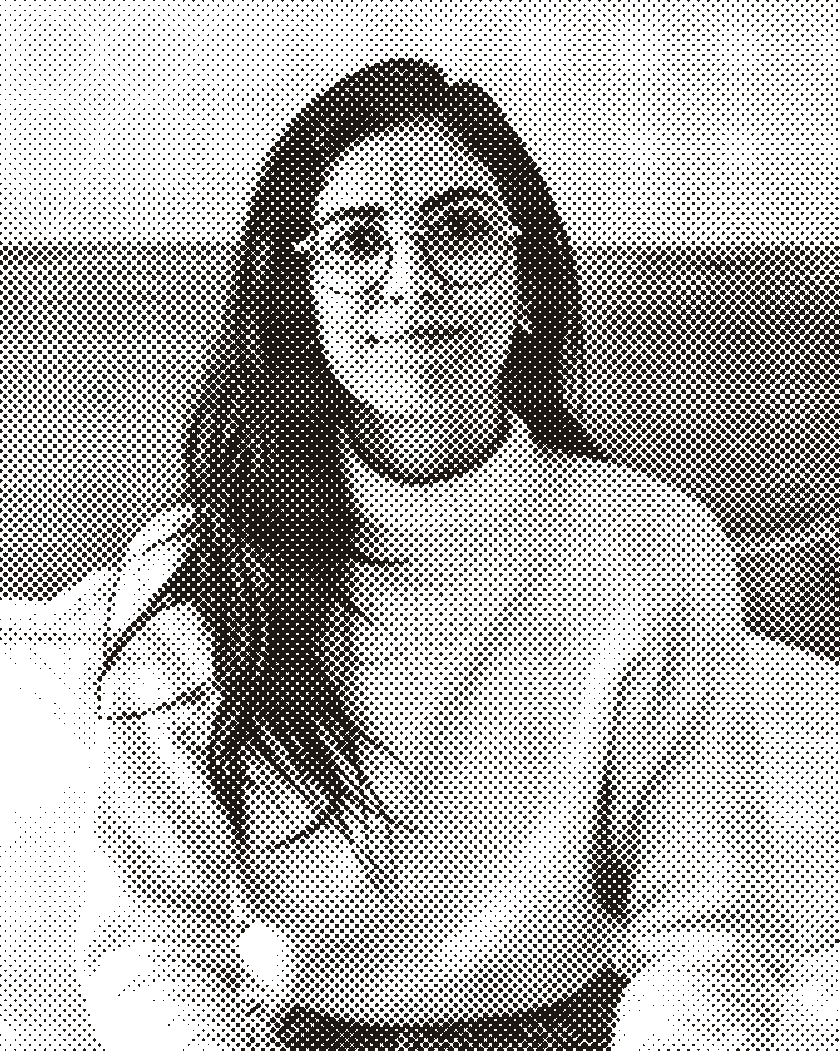
I’m a Pakistani writer and born storyteller. I moved to the United States in 2012 to study at Sarah Lawrence College, and I’ve been part of the Brooklyn Writers Collective since 2020. I joined as a writer and went on to teach there, first assisting and then leading my own workshops. My writing has appeared in Thimble Literary Magazine.
These days I live in the Netherlands with two good friends and my emotionally unavailable rescue dog. I teach online, and I build installations with the creative team of Familiar Forest Festival.
I love helping a poem find a person at the moment they need it most, or asking a question that punctures something in the writer and allows new ideas and questions to ooze out.
Yes. When I joined the Brooklyn Writers Collective, I was hesitant to call myself a writer, too. You don’t need any experience.
Yes. My piece “Karachi” was published in Thimble Literary Magazine in 2023, and you can read it here. More pieces will follow.
Only if you want to. You can pass any week.
English. I’ve worked with Dutch writers, too, and you’re welcome to write in your own language.
Yes. I’ve worked with artists who turned their class writing into music, theatre, and movement.
We talk for twenty minutes about what you’d like to write and which option suits you.
Each workshop group has one pay-what-you-can place, and Open Write runs on donations. Just ask.
Tell me a little about what you’d like to write. I reply within two days.
I taste the places I’ve lived in, feel them explode in my mouth, melt on my tongue, sometimes it burns on the way down.
Karachi is spicy and lemony, piping hot and crunchy, stewed and steaming.
It’s a Marie biscuit drenched in chai on a crisp evening in my grandmother’s garden.
It’s bakra eid 1998 with my cousins. The day we landed there was a cow tied to the trunk of the willow tree in that garden that I always wanted to climb. Rhea and I named the cow Lucille, after the main character in I Love Lucy.
All eight of us cousins slept on the floor of the upstairs living room on mattresses and blankets. Come eid morning the boys shook us awake at dawn, just as the butchers were arriving.
Come on! You have to see this!
They led us out to the balcony and below us in the driveway Lucille was putting up a valiant fight, but she stood no chance. I covered my eyes and when I opened them again she was on the ground convulsing violently, until finally she bled out.
While her body parts were being chopped up under the shade of the car park to be distributed amongst family, friends, and the needy, our portion to be marinated in spices and raw papaya for the annual eid barbecue, her blood was washed down the driveway with the power hose and drained out onto Khayaban-e-Mujahid.
Karachi is a river of blood flowing through the streets on eid day and the smell of still-fresh carcass all through the city.
It’s tearing off a piece of hot, fluffy naan from its newspaper wrapping in the backseat of the car, knowing well you’ll be spanked for it later.
It’s six takeaway boxes of Indus biryani in your best friend’s basement with Tame Impala blasting on the speakers.
It’s sweet, ripe mangoes and plates of homemade masala fries.
The night Benazir Bhutto was assassinated I ate so many fries I could have popped. We were at Cafe Crescent where they made hot chocolate so rich you ate it with a spoon. I was with Zara and the guy she was cheating on her overseas boyfriend with, and a friend of hers, Dalia, who I had never met before.
It was December 27th 2007, the elections were a month away and it was the only time of year Karachi cooled down enough to truly allow one to appreciate a cup of pure molten chocolate. I was happily savouring spoonfuls of it when the server came to our table shuffling his feet uncomfortably, as though he were passing the words back and forth trying to mold them into something with smoother edges. He was barely twenty.
There was an explosion at the rally, he told us. Benazir Bhutto is dead.
We laughed at him, there was no way.
I’m sorry but we have to close the cafe. He placed the cheque on our table like it too would explode at any moment.
The TV screens scattered around the room switched from Rihanna twirling her umbrella to Geo TV’s news coverage of the rally in Rawalpindi. A mob had already swarmed the scene—mourners, angry and wailing, reporters, hungry for a deliciously gruesome photo.
Outside on the streets of Karachi petrol stations and police cars were burning.
The news anchor said it was shrapnel in her neck that had killed her, that they barely got away with it.
Dalia’s house was just four gallis down, so we decided we would hunker down at hers for the night. When we got to her house, her dad was in a dark room with the door ajar, news coverage was flickering on the TV screen. I could hear him crying in soft little whimpers. I would learn later that he was a relative of Benazir Bhutto’s. Dalia pressed a finger to her lips and we tiptoed past his door into a different wing of the house, where her bedroom was.
She had a four poster bed and at least a hundred stuffed animals. She rang down to her cook on the intercom.
Harris Bhai can you please bring us some chips?
Twenty minutes later we were huddled around a steaming plate on the floor, dipping hot greasy french fries in sweet ketchup as our country burned.
Back at home my father was slumped over drunk, the way I knew him best. It was the 30th anniversary of my parents’ woeful marriage, I thought it was fitting that it should fall on a day of national mourning and destruction. My mother watched the news in my brother’s room and called all three of her children to make sure we were safe.
She was always doing double-duty trying to plug the holes of my father’s ineptitude as best she could, always scrambling to sew together the scraps of our childhood after he had torn them into shreds.
My first summer back from college I got her a cake for Father’s Day—Black Forest from Copper Kettle, her favorite.
Thanks for being our mum and our dad, I said.
Afraid of hurting his feelings, she gave the cake to my dad and pretended we had gotten it for him. He believed her and congratulated himself for being father of the year as he pierced his fork through layers of dark chocolate and cherry.
By the time I had reached middle school, Babs went to jail the way other dads went on business trips. There was never any warning. I would come home from school one day and all the women in the family—my mum, aunts, family friends—would be in our house counting duas on strings of delicate prayer beads, white scarves around their hair and dark rings around their eyes.
We never knew how long it would be for—sometimes he would be released after a day or two, sometimes it was a couple of months. He always had a scruffy beard when he came home.
Like a ritual, Mum would make his favorite dish—fish and coconut curry with whole chillies and mustard seeds over a bed of steaming basmati rice. He would sit at the head of the dining table and tell us stories about the people he had met inside as he molded each bite into a little ball with his fingers and popped it in his mouth. Babs has always loved weaving his tales, brimming with dramatics and gratuitously long pauses where one wonders if perhaps he is finished telling the story, but then off he goes again.
The next day, like clockwork, his face would be shaved clean again and life would resume, unchanged.
Karachi tastes like my father’s blood in my mouth, metallic and crude, as I try to peel him off my screaming mother. It tastes like the pink bile I retch up in the bathroom afterwards, horrified by what I am capable of.
Sometime during the pandemic I finally picked up the phone to call Mum from my apartment in Brooklyn. I didn’t know what to say, how to explain my silence the past few years. I couldn’t tell her that I loved her too much to talk to her, that hearing her voice flooded my brain with terror, made my heart push down in my chest so hard I couldn’t breathe. I couldn’t tell her that I had put myself in a 12-step program so I wouldn’t become like my father. I couldn’t tell her that after years of excavating my subconscious in therapy I had uncovered my dusty, fossilised resentment towards her—for staying with him, making us stay with him—and that I was angry. I couldn’t tell her that I was too ashamed of myself to face her, that I felt like I had let her down because I couldn’t save her.
So instead, I asked her for the recipe for the sooji she used to make me when I couldn’t sleep. I remember clutching her white nightie—or, as I got older, perching myself on the kitchen counter—as she stirred the bubbling pot on the stove.
Grab a pen, she said on the phone.
You start with the semolina and a dab of ghee to toast it. Just before it turns brown, add milk and a little bit of sugar to the pot. Let the mixture bubble away until it’s creamy and rich, and the kitchen smells like home.